

One reason many Australians are uneasy about the direction of our country is officialdom’s rush to make key changes without meaningful public input, either from voters or their elected representatives. For instance, when did any elected government make a formal decision to almost double Australia’s immigration intake, to fly three flags rather than one on all government buildings, or to begin all civic events with acknowledgments of “country”? The Australian people have never been asked for their views on any of these developments despite their immense significance for the future and how we see ourselves as a nation.
Effectively, these changes have been made by the administrative state and then treated as “done deals” that could be questioned only by cultural troglodytes. This sense that far-reaching change has been foisted on a public that’s been kept in the dark helps to explain the rise of conspiracy theories and increasing support for previously fringe political movements.
The latest example of officialdom’s tendency to push change-by-stealth that alters how we see ourselves as Australians, is the sudden push to rename the Tasmanian federal electorate of Franklin, a federation seat, so-called after an early governor, later the famed-if-ill-starred Arctic explorer, after the Aboriginal warrior Tongerlongeter. This change was announced on Wednesday with the public given scarcely five working days to make submissions-in-response by midnight next Tuesday. The Australian Electoral Commission will then hold one day of public consultation at the end of the month before finalising its decision.

Australians should indeed know more about Tongerlongeter and about what have become known as the “Black Wars” that took place in Tasmania in the 1820s. For the first decade or so after the establishment of the Tasmanian colony in 1804, while it largely remained a convict settlement and sealing station, relations between the settlers and the local indigenous people were relatively peaceful. Indeed, another future warrior, Kickertopeller, seems to have worked on a small farm owned by one of the colony’s first doctors, in one of the many instances of cooperation as well as conflict on the frontier of settlement. That changed once pastoral expansion pushed out beyond the Derwent Valley to settle what had previously been local peoples’ hunting grounds.
In Professor Henry Reynolds’ sympathetic and carefully researched account, Tongerlongeter was the main leader of the organised Aboriginal resistance which was far more effective and sustained than anywhere else on the Australian frontier. Exploiting Aboriginal peoples’ superior bushcraft and agility with spears and clubs, resistance steadily scaled up from the killing of isolated shepherds to raids on farmhouses which could readily be rushed while the defenders were reloading their weapons. By scouring contemporary records, Reynolds and his fellow researchers reckon that Tongerlongeter’s bands killed some 180 settlers and seriously wounded as many again. Understandably, this created uproar in a settler population then numbering scarcely 20,000.
In response, Governor George Arthur declared martial law and organised the infamous “black line”: a force of 2000 soldiers, police and settlers that tried to emu-bob much of the island in an attempt to kill or apprehend the warriors terrorising the settlement. While this was a comprehensive failure, bands of settlers inflicted even heavier casualties when they came upon Aboriginal camps. One of the more brutal participants was John Batman, later a founder of the new Port Phillip settlement across the Bass Strait, who records in his diary killing two wounded Aboriginal prisoners no longer able to accompany his party. In yet another of the paradoxes of those much harsher times, Batman did take some Aboriginal orphans into his family.
Eventually the Tasmanian Aboriginal population was vastly reduced by disease, by starvation due to the loss of hunting grounds, and by fighting—sometimes internal as well as with settlers—from some thousands to some hundreds. In a parley arranged by Kickertopeller, Tongerlongeter led some 30 of his remaining armed warriors in a parade through Hobart to meet with the governor to settle the war. While Arthur had some good intentions, the subsequent two decade exile to “safety” on Flinders Island, resulted in the deaths of hundreds more Aboriginal people from sickness and despair. The tragedy continued on their return, with Truganini, then said to be the last of the Tasmanian Aboriginals, dying in 1876.
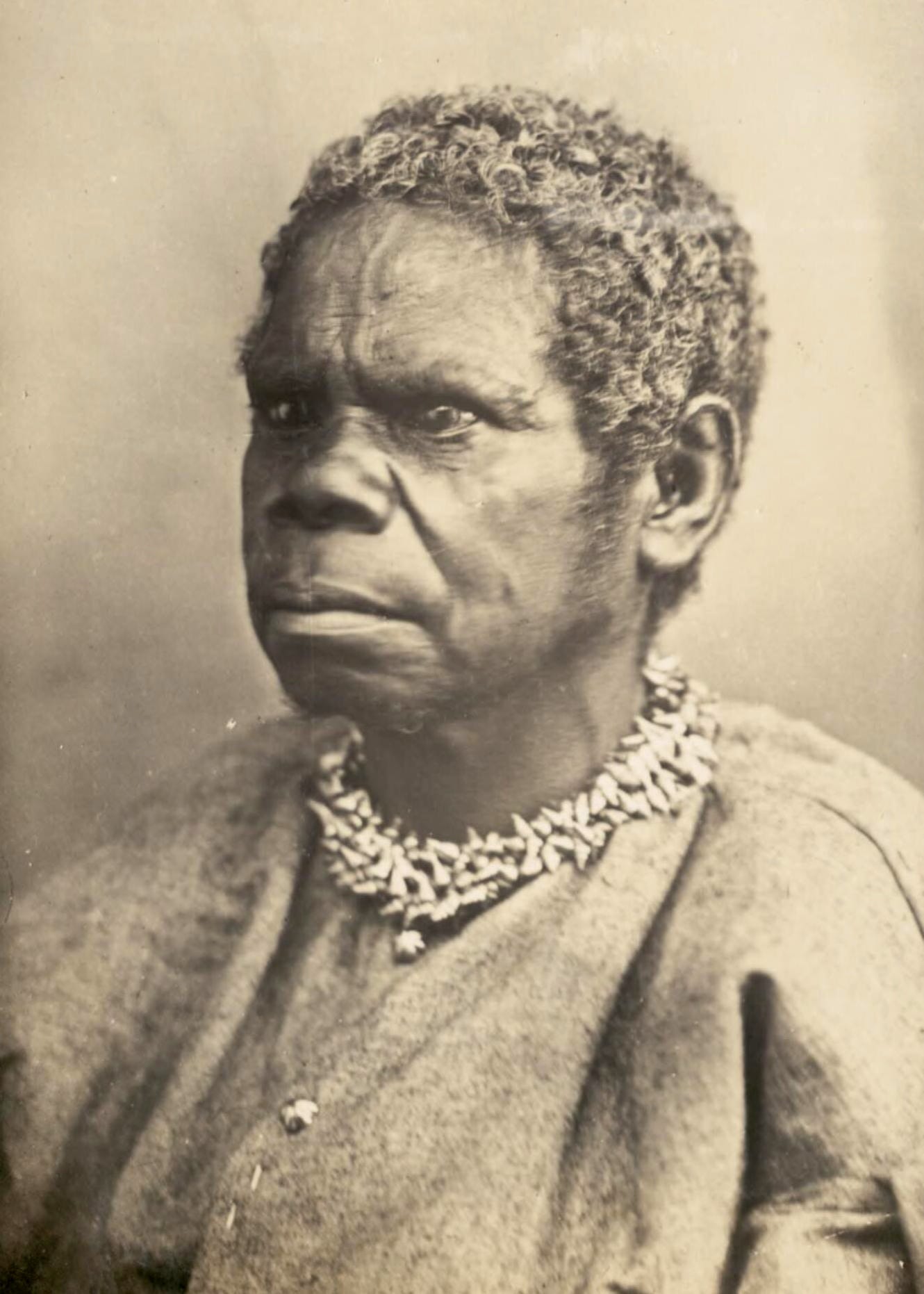
There’s no doubt that Tongerlongeter and his warriors should be remembered and honoured as doughty fighters for their peoples and for the way of life they knew and cherished. Doubtless, this will soon take place in the new galleries to be dedicated to “frontier wars” at the expanded Australian War Memorial. But provided they fought by the reasonable standards of their day, so too should the settlers who prosecuted what they also saw as an existential conflict.
Quite apart from the fact that important symbolic decisions should not be rushed, there are two key problems with renaming the seat of Franklin after Tongerlongeter. First, it’s against the AEC’s standard procedure that’s to preserve the names of seats that have existed since the time of Federation. Second, and much more important, if Batman has been retired as the name of a federal parliamentary seat, because of his unsavoury personal conduct, isn’t it a double standard now to commemorate in this way Tongerlongeter, whose many casualties (understandably enough under the circumstances) included women and children?
Quite properly, the names of parliamentary seats these days acknowledge significant Aboriginal people who have “rendered outstanding service to Australia”, such as William Cooper, Vincent Lingiari, and Neville Bonner, as well as Bennelong. But if it’s really necessary to have an indigenous name from Tasmania, what about naming a seat after Truganini in recollection of the errors of those times?
As for lionising Tongerlongeter, what about erecting a statue to him, with an explanation of the tragedy that was inevitable in the clash of two then-very-different and mutually misunderstood cultures, perhaps to stand alongside the restored statue of Premier William Crowther, as a reminder of our shared flawed humanity. Better that than posthumously recruiting him into the culture wars that are dividing and demoralising our nation.
I should thank readers for pointing out an inadvertent error in the original piece – my claim that there was already a seat of Truganini in the ACT – which shows why “information” should be triple checked.
Well said and an entirely appropriate statement to be made by the Liberal Party federal President. It should be supported by the federal parliamentary leader.
The current state of this country and what’s being done to it economically, socially, culturally and in every other way leaves me beyond despair